The Difference Between Paint Correction and Full Paint Restoration
Choosing between cosmetic car refinishing services can be confusing, especially when the damage is not immediately obvious. Many vehicle owners assume all paint-related services are the same, but the reality is far more nuanced. Understanding the difference can help prevent unnecessary costs and ensure the right level of care is applied.
Modern vehicle finishes are complex, often consisting of multiple layers designed for durability, gloss, and UV protection. When those layers become damaged, faded, or contaminated, different corrective approaches are required depending on severity.
One of the most commonly misunderstood distinctions in automotive detailing is between light surface enhancement and deeper structural refinishing work, often referred to in broader terms such as paint restoration. Knowing where your vehicle falls on this spectrum is essential for long-term value retention.
Understanding Paint Correction
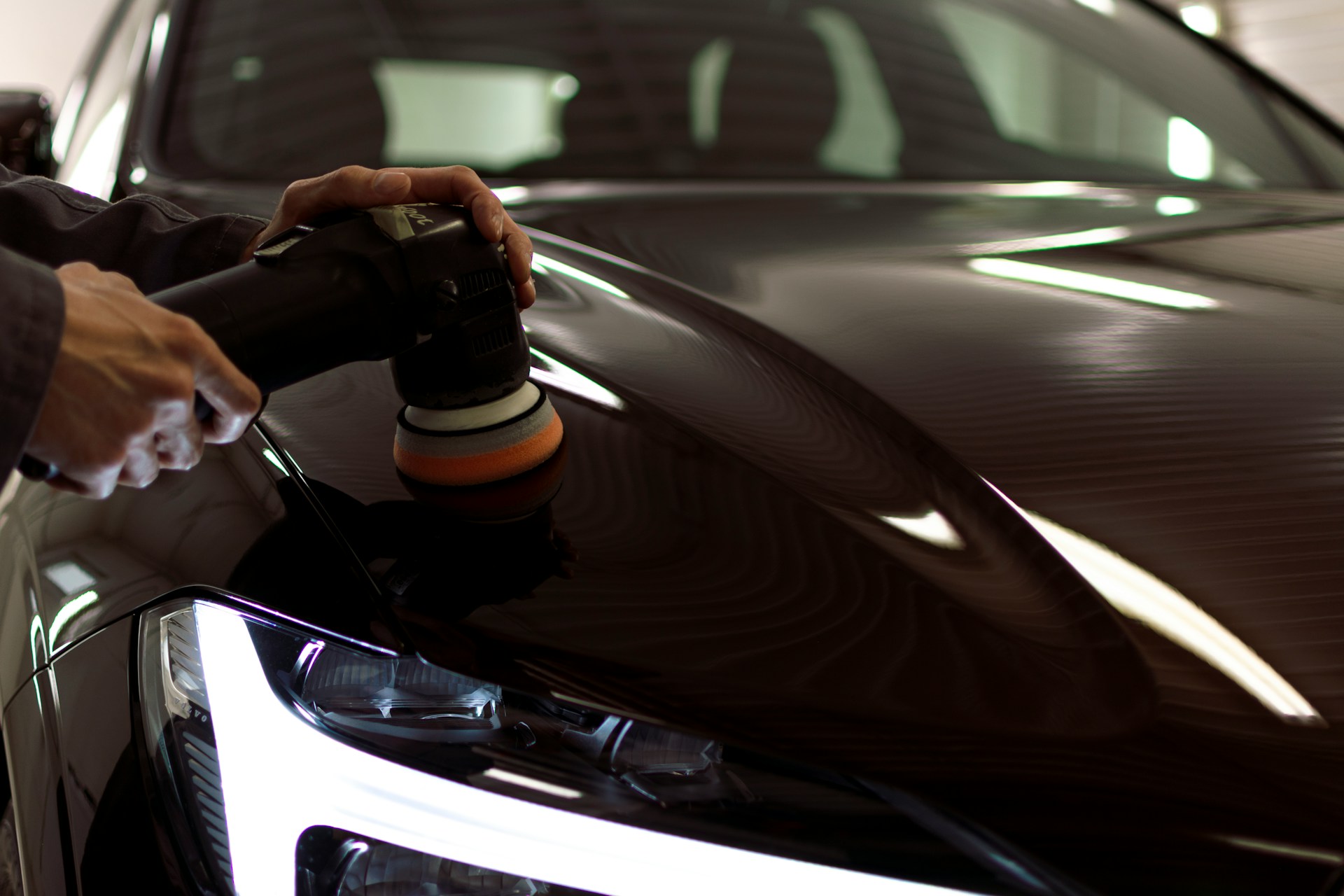
Paint correction is a precision-based process focused on improving the appearance of a vehicle’s clear coat. It targets surface-level imperfections such as swirl marks, light scratches, oxidation, water spots, and holograms left by improper washing or polishing techniques.
Unlike repainting or heavy refinishing, paint correction does not involve adding new paint layers. Instead, it carefully levels the clear coat using machine polishing and abrasive compounds. The goal is to restore clarity and gloss without altering the factory finish.
Technicians typically assess paint thickness before starting. This ensures that enough clear coat remains for safe correction. Over-polishing can weaken the protective layer, which is why professional evaluation is essential.
A key advantage of paint correction is that it preserves originality. For many vehicle owners, maintaining factory paint is important for resale value and authenticity. However, it is limited in scope and cannot fix deep scratches or structural paint failure.
What Full Paint Restoration Involves
Full paint restoration is a more comprehensive process that addresses extensive paint degradation. This may include severe oxidation, peeling clear coat, deep scratches, and widespread fading caused by prolonged sun exposure or neglect.
In some cases, panels may require partial or full respraying. This is where colour matching, primer application, and multiple paint layers are used to rebuild the surface. Because of this, full restoration is more invasive than correction and requires significantly more time and expertise.
The process often includes sanding, priming, repainting, and sealing, followed by final polishing to achieve a uniform finish. Each stage is designed to rebuild the paint system rather than simply refine it.
At this level of work, many vehicle owners also consider broader detailing or bodywork alignment to ensure consistency across all panels. When discussing broader services, professionals may refer to comprehensive solutions such as paint restoration as part of the vehicle’s overall refurbishment plan.
Key Differences Between the Two Services
Although both processes improve appearance, they differ significantly in approach, cost, and outcome.
Paint correction focuses on refinement, while full restoration focuses on rebuilding. One enhances what already exists, while the other replaces or reconstructs damaged layers.
Key distinctions include:
- Depth of damage addressed
- Level of intervention required
- Time and cost investment
- Impact on original factory finish
- Expected longevity of results
Paint correction is best suited for relatively well-maintained vehicles with minor cosmetic imperfections. Full restoration is necessary when the paint system itself has deteriorated beyond surface-level repair.
Understanding these differences helps prevent under-treatment or over-treatment, both of which can lead to unnecessary expense or suboptimal results.
Step-by-Step Process Comparison
To better understand how each service works, it helps to break them down into their typical stages.
- Initial inspection and paint assessment
Technicians examine the condition of the paintwork, measuring thickness and identifying defects. This step determines whether correction or restoration is appropriate. - Surface preparation
The vehicle is thoroughly washed and decontaminated. Iron particles, tar, and embedded debris are removed to ensure a clean working surface. - Core treatment stage
- For paint correction: machine polishing with varying grades of compound is used to refine the clear coat.
- For restoration: sanding, priming, and repainting may be required to rebuild damaged panels.
- Finishing and protection
A final polish is applied in both processes, followed by a protective sealant or coating to preserve results.
Each stage requires precision, especially when dealing with modern paint systems that are thinner and more sensitive than older finishes.
When to Choose Each Option
Selecting the correct service depends on the condition of the vehicle rather than personal preference alone. A visual inspection is often not enough; professional evaluation provides a more accurate diagnosis.
Paint correction is typically suitable when:
- The vehicle has swirl marks or light scratches
- Paint appears dull but intact
- There is no peeling or major fading
- The goal is cosmetic enhancement
Full restoration becomes necessary when:
- Clear coat is peeling or flaking
- Colour has significantly faded or oxidised
- Deep scratches reach base layers
- Previous repainting is uneven or damaged
In cases where both cosmetic and structural issues exist, technicians may recommend a combined approach. This ensures both surface refinement and structural repair are addressed effectively.
It is important to avoid assuming that minor imperfections can always be fixed with polishing alone. Misjudging severity can lead to wasted effort or further deterioration of the finish.
Cost, Time, and Outcome Expectations
The difference in complexity between these services directly affects cost and turnaround time. Paint correction is generally faster and less expensive, while full restoration involves more labour and materials.
Typical considerations include:
- Labour intensity increases significantly with restoration work
- Paint materials, primers, and clear coats add to overall cost
- Downtime is longer due to curing and layering processes
- Results from restoration tend to last longer when properly maintained
While paint correction offers immediate visual improvement, it does not resolve underlying structural issues. Restoration, on the other hand, addresses both appearance and durability.
In professional detailing environments, terms like paint restoration are often used to describe the highest level of finish repair available, especially when multiple stages of repair and refinishing are required.
Maintenance After Service
Proper maintenance is essential to preserve results, regardless of which service is chosen. Even the highest-quality finish can degrade without correct care routines.
- Use pH-neutral cleaning products
Harsh detergents can weaken protective layers and reduce gloss over time. - Avoid automatic car washes with abrasive brushes
These can reintroduce swirl marks or damage newly treated surfaces. - Apply protective coatings regularly
Wax or ceramic coatings help shield the paint from UV rays and contaminants. - Wash the vehicle gently and consistently
Regular maintenance prevents buildup of dirt that can accelerate wear.
In addition to these practices, parking habits also play a role. Prolonged exposure to sunlight is one of the leading causes of paint deterioration, especially for vehicles that have previously undergone extensive refinishing work.
A well-maintained finish ensures that investments in services such as paint restoration remain effective for years rather than months.
Final Considerations on Choosing the Right Approach
Understanding the distinction between correction and restoration helps vehicle owners make informed decisions based on actual condition rather than assumption. While both approaches aim to improve appearance, their methods and outcomes are fundamentally different.
Choosing the correct level of intervention ensures that the vehicle’s paint system is treated appropriately, preserving both aesthetic quality and long-term value.